Table of Contents
- The City of Charlotte filed a motion Monday asking a judge to dismiss, in whole or in part, the wrongful death lawsuit over Iryna Zarutska's killing on the city's light rail.
- The city argues governmental immunity protects transit policing, crime prevention and security-contractor oversight under North Carolina law.
- If any claims survive, Charlotte wants the court to cap what it could pay at $1 million.
- Zarutska, a 23-year-old Ukrainian refugee, was stabbed to death on a Lynx Blue Line train in August 2025. Her uncle, Frank Haskell, filed the suit this August.
- The man charged in her killing, Decarlos Brown Jr., is in federal custody. A hearing in his state murder case was pushed to May 2027, the Carolina Journal reported.
Iryna Zarutska fled Putin's war and was stabbed to death on a Charlotte light rail train. On Monday, the city that runs that train asked a judge to throw out the wrongful death suit over her killing.
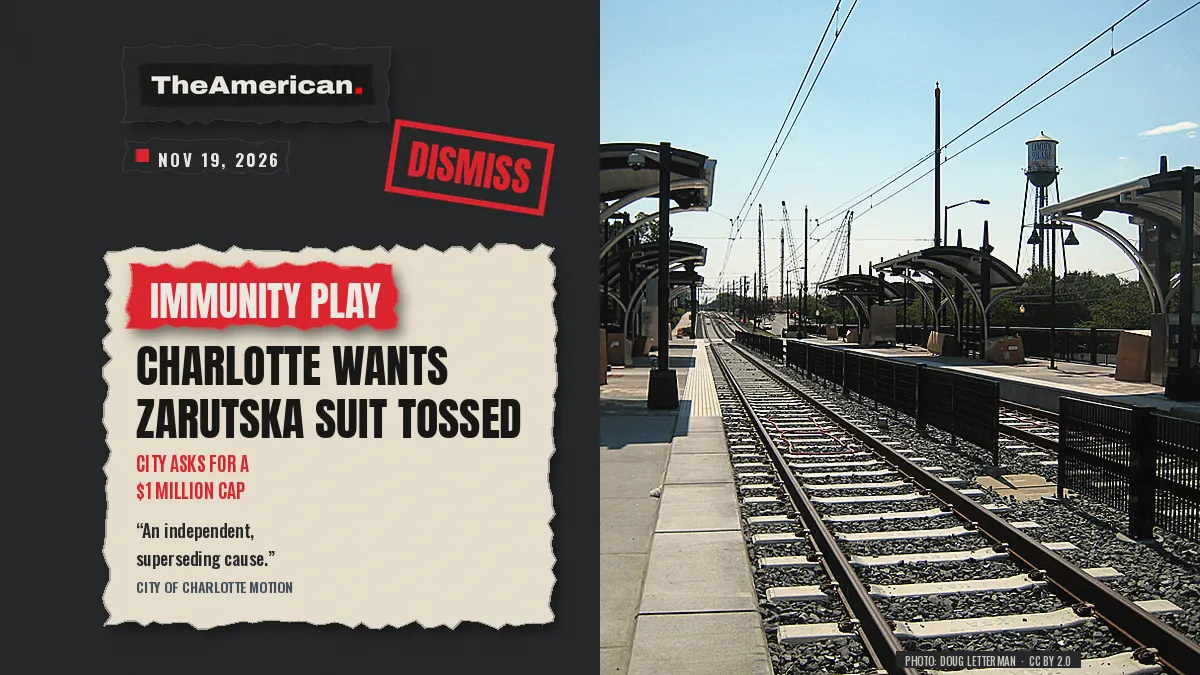
Charlotte filed a motion Monday in Mecklenburg County Superior Court asking a judge to dismiss the wrongful death suit brought by Zarutska's uncle, Frank Haskell, the Carolina Journal reported. The city wants it tossed "in whole or in part," and with prejudice where it can get it. That would mean Haskell could not file those claims again.
The motion came after a four-hour mediation between the family and the city ended in an impasse earlier this month, The Charlotte Observer reported.
Zarutska was 23. She came to America as a refugee from Ukraine. In August 2025 she was stabbed to death on a Lynx Blue Line light rail train. Decarlos Brown Jr. is charged in her killing and remains in federal custody. A hearing in his state murder case was recently delayed until May 2027.
Haskell, who was hosting the family in Charlotte, sued the city and its transit security contractor, Professional Security Services, one day before the anniversary of her death.
The complaint doesn't pull punches. "Long before Iryna Zarutska boarded that train, Defendants knew that violent crime had repeatedly occurred on and around the Blue Line and the Charlotte Transportation Center," it says. It accuses them of failing to use "reasonable and available safety measures, including fare enforcement, physical access barriers, adequate staffing, effective security deployment, monitoring, and passenger warnings."
The city's answer is, in short, you can't sue us for that.
Charlotte's lawyers argue that everything the family is complaining about, "law-enforcement deployment, transit policing, crime prevention, security-contractor oversight, and public-safety administration," is a governmental function protected by governmental immunity under state law.
They also lean on something called the public-duty doctrine. In plain English, the city says it owed a general duty to protect the public, not a special duty to protect Iryna.
And they argue the attack itself breaks the chain. "Mr. Brown's intentional criminal act was an independent, superseding cause," the motion says.
The city does acknowledge the loss, in lawyer language. "The City recognizes the tragic and devastating death of Iryna Zarutska as the result of an intentional criminal attack by Decarlos Brown Jr.," its attorneys wrote. "The City denies that it ignored passenger safety or that its conduct legally caused that attack."
Then comes the money. If any part of the case survives, Charlotte wants a judge to rule that its payments are "subject to the cumulative $1,000,000 limit" set in state law. The family has not said how much it is seeking.
Charlotte also says it shouldn't answer for anything its security contractor did or didn't do, because the company was an independent contractor.
A young woman who escaped Putin's bombs got on a city train and never got off. The city's first public word in court is that it is immune, it owed her nothing special, and if it does owe anything, the number stops at a million dollars.
Charlotte had a chance to show it took her death seriously. It sent a motion to dismiss instead.
And if the case survives, Charlotte wants the bill capped at $1 million. That is the city's word to the family of a woman killed on its own train.