Table of Contents
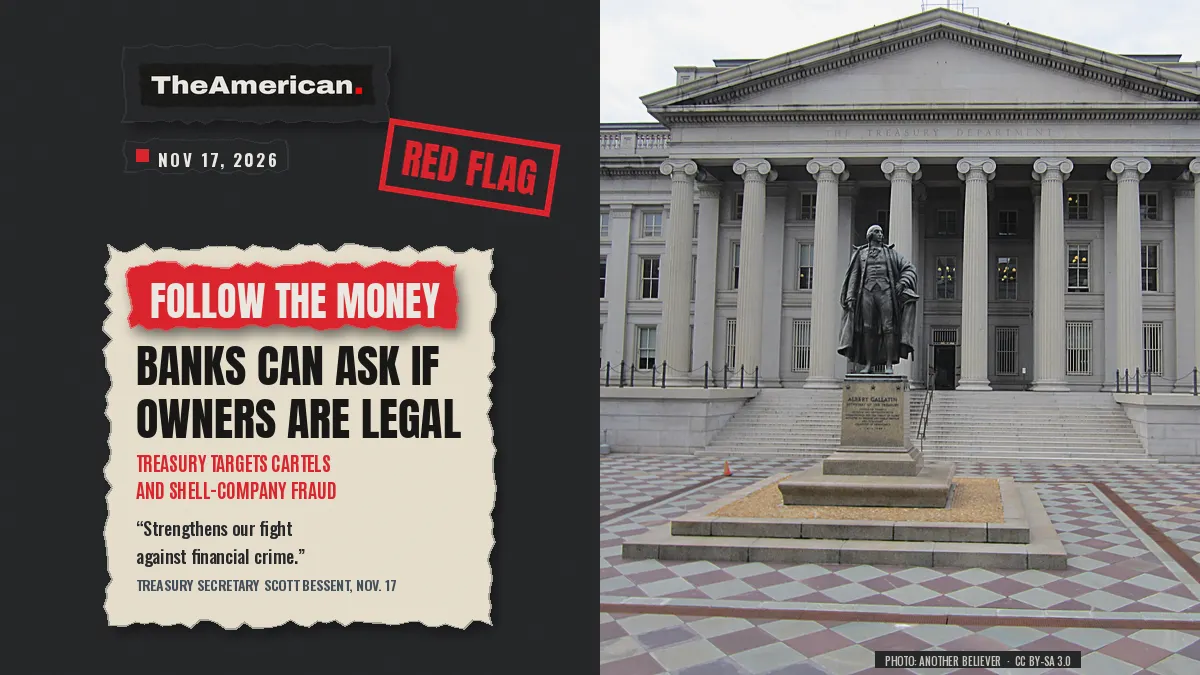
- Treasury's Financial Crimes Enforcement Network proposed a rule Tuesday to tighten how banks check the owners of business customers.
- The proposal says banks can seek information on whether a business's owners have lawful immigration status and work authorization when that is relevant to assessing risk.
- It does not require banks to verify every customer's immigration status.
- It also drops the requirement to re-verify a business's owners every time it opens a new account, and public comments run for 60 days after publication in the Federal Register.
If you run a cartel, a shell company is a beautiful thing. Treasury wants to make it a lot less beautiful.
The Financial Crimes Enforcement Network, the Treasury office that polices money laundering, proposed a rule Tuesday that gives banks more room to dig into who really owns the businesses they bank.
"Financial institutions are on the front lines of protecting our financial systems from criminal organizations and cartels that target law-abiding businesses and workers," Treasury Secretary Scott Bessent said. He said the rule "cuts unnecessary burden, gives institutions more flexibility to effectively combat risk, and strengthens our fight against financial crime."
Here's the part that's going to get noticed. The proposed rule says banks keep the authority, "where warranted," to get more information about a company's owners, "including information relevant to whether the beneficial owners of legal entity customers possess lawful immigration status and employment authorization in the United States when such information is relevant to assessing risks."
In plain English: if something looks off, the bank can ask whether the people behind the business are here legally and allowed to work.
That's it. That's the scandal the left is going to try to make out of this.
It's not a dragnet. The proposal doesn't require banks to check every customer's immigration status, Fox News reported. It applies when there are red flags or supervisory concerns.
The rule does three things, per Treasury. It spells out that banks can collect more information about a business customer's owners when that helps manage risk. It writes into the rules relief FinCEN already gave, so banks no longer have to re-identify and re-verify a company's owners every single time it opens a new account. And it sets the minimum information banks must get on each owner.
So it's tougher where it matters and lighter where it doesn't. Red tape out, real scrutiny in.
The proposal comes straight out of President Trump's Executive Order 14406, "Restoring Integrity to America's Financial System," which he signed in May. That order already pushed regulators to warn banks about fraud tied to the illegal employment of illegal aliens. FinCEN and three bank regulators put out that warning in June.
A quick translation of the jargon. A "beneficial owner" is the actual human being who owns or controls a company, not the name on the paperwork. A "legal entity customer" is the business itself. Banks already have to identify the owners when a company opens an account. The fight has always been over how hard they're allowed to look.
Why does this matter? Because illegal hiring runs on money, and money runs through banks. Front companies, straw owners and payroll schemes all need an account somewhere. If the bank can't ask who's behind the account, the scheme works.
Under this rule, it can ask.
The comment period runs 60 days after the proposal is published in the Federal Register, so expect the usual groups to line up against it.
Let them explain why a bank shouldn't be allowed to ask a simple question when the red flags are already flying.