Table of Contents
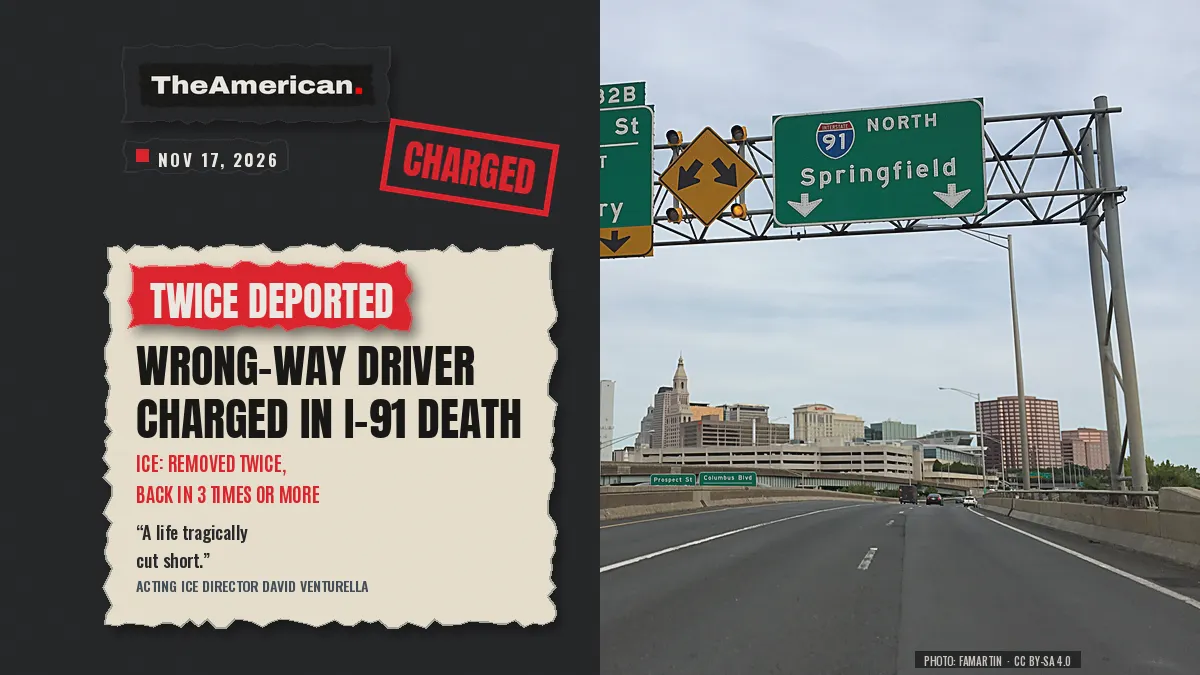
- Ryan O'Shea, a 21-year-old University of New Haven senior and club hockey player, was killed Oct. 16 when a wrong-way pickup hit his car head-on on I-91 in North Haven, Connecticut, police said.
- Connecticut State Police charged Guillermo Carmona-Lopez with second-degree manslaughter, operating under the influence and a string of other counts. He was arrested at the hospital Nov. 9 and held on $500,000 bond.
- ICE says Carmona-Lopez, a Mexican national, had been removed from the U.S. twice and entered illegally at least three times, and it has lodged an immigration detainer.
- "He deserves to be remembered for the life he lived and the future he was working so hard to build," acting ICE Director David Venturella said.
Ryan O'Shea was coming home from a hockey game.
He was 21, a senior at the University of New Haven and a leader on the school's club hockey team. He wanted to be a police officer. On the night of Oct. 16, a pickup truck heading north in the southbound lanes of I-91 in North Haven hit his car head-on, ICE said in a release. The impact pushed his car into the path of two more vehicles. He was pronounced dead at the scene.
Four other people were hurt, NBC Connecticut reported, with minor injuries.
Connecticut State Police have now charged the man they say was behind the wheel. Guillermo Carmona-Lopez faces charges including second-degree manslaughter, operating under the influence, reckless driving, wrong-way driving on a divided highway, three counts of first-degree reckless endangerment, three counts of third-degree assault, operating with a suspended license, and second-degree manslaughter with a motor vehicle, police said.
He was taken to Yale New Haven Hospital with serious injuries after the crash. Police arrested him there on Nov. 9 on a warrant. He was held on $500,000 bond and arraigned from his hospital bed on Nov. 12. He has not been convicted of anything, and the crash remains under investigation.
Now here's the part that should make you angry.
According to ICE, Carmona-Lopez is a Mexican national who had already been removed from the United States twice and had entered the country illegally at least three times. Border Patrol arrested him in May 2013 after he crossed illegally. He was given an expedited removal order and sent back. Later that same month he came back across near the Rio Grande Valley and was caught again. An immigration judge issued a final order of removal on May 30, 2013.
Then he got back in. ICE says it was at least one more time, at an unknown place on an unknown date.
Reentering the country after a removal is a federal felony.
So the system caught this man twice in one month, ordered him out, and he still ended up on a Connecticut interstate more than a decade later. ICE has now lodged an immigration detainer against him, asking that he be handed over to federal custody instead of released.
That detainer matters. If this man is ever in a position to walk out of state custody, he should be walking straight into the arms of federal agents. Connecticut officials ought to say now, out loud, that they'll honor it.
"Ryan O'Shea was just 21 years old," acting ICE Director David Venturella said. "He was a college student, a hockey player and a young man preparing for a career protecting others. His family should be celebrating his accomplishments and looking forward to his future. Instead, they're mourning a life tragically cut short."
Venturella added that O'Shea "deserves to be remembered for the life he lived and the future he was working so hard to build."
He does. He should be remembered as the kid who wanted to wear a badge. It's also fair to ask how many times a country has to remove the same man before the removal sticks.
This is why the border fight was never abstract. It's why final orders of removal have to mean final. And it's why the people in Washington who want to "abolish ICE" should have to explain themselves to families like Ryan O'Shea's.
Our thoughts are with his family, his teammates and everybody at the University of New Haven who knew him.