Table of Contents
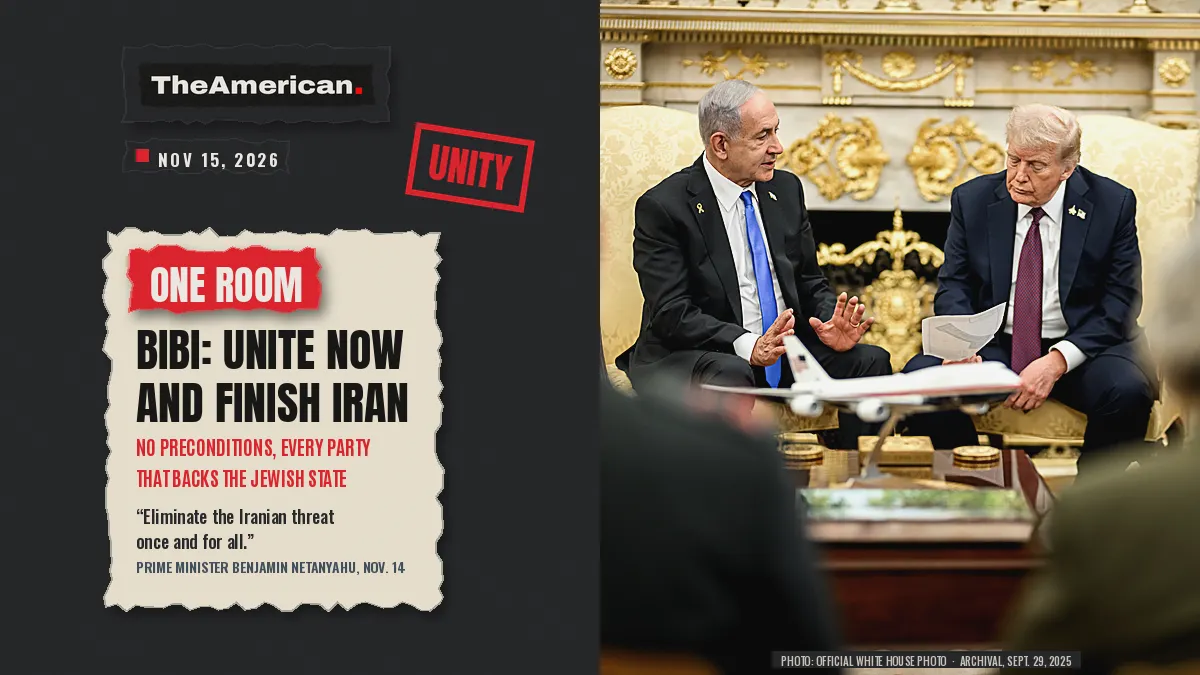
- Israeli caretaker Prime Minister Benjamin Netanyahu on Saturday called on Gadi Eisenkot to form a national unity government of parties that back Israel as the Jewish state.
- Netanyahu said such a government could "eliminate the Iranian threat once and for all."
- He warned that Iran's regime "will not hesitate to use nuclear weapons against us."
- Eisenkot, tapped last Sunday to form a government, called the offer "tricks" and is weighing a minority government instead.
- The Knesset votes Tuesday on a new speaker, the next test between the two camps.
Israel is at war with a regime that chants for its destruction. Its election left no one with a clean majority. And on Saturday night, Benjamin Netanyahu made the obvious offer: stop fighting each other and get in one room.
"Let us enter a room, without preconditions, put aside all the disagreements and all the boycotts, and reach agreements for the security and future of Israel," Netanyahu said in a video statement aimed at Gadi Eisenkot, The Jerusalem Post reported.
Eisenkot, the former army chief who leads the Yashar party, was tapped last Sunday to try to form a government. He has 28 days, with a possible 14-day extension.
Netanyahu said his Thursday security briefing for Eisenkot "only strengthened the conviction that it is essential to form a national unity government," according to AFP. He said that government could "eliminate the Iranian threat once and for all."
That is the stake. Not cabinet seats. Iran.
"The Iranian regime, which seeks Israel's destruction, is once again working to renew its nuclear program," Netanyahu said. "And let it be clear, this murderous regime, which did not hesitate to murder many thousands of its own people, will not hesitate to use nuclear weapons against us."
His proposed coalition would bring in the Jewish-majority parties from center to right, everyone who recognizes Israel "as a state for the Jewish people." He even left room on conscription, saying the draft fight "can be resolved together with representatives of the haredi public." Unlike earlier pitches, he did not say he had to be the one leading it, The Times of Israel noted.
So what is the alternative on the table? Eisenkot has floated a minority "national emergency government." AFP laid out the math: his bloc's 48 lawmakers would vote yes, Netanyahu's 46 would vote no, and the 26 members from Arab and ultra-Orthodox parties could abstain. That is how you get a government without a majority of the 120-seat Knesset.
A government that survives on abstentions is not a war cabinet. It is a hostage.
Netanyahu tied his pitch to a moment Israelis saw this week. At the Knesset swearing-in on Tuesday, Joint List lawmakers walked out of the chamber as Hatikvah began, JNS reported. Ra'am leader Mansour Abbas stayed and stood. Netanyahu said the right answer to the walkout was a "government of hope," a play on the anthem's name.
Eisenkot's answer came within minutes. Netanyahu "knows he lost the election," he said, and is "calling for negotiations while they are already underway." He added, "These tricks don't work on me." Eisenkot has said he could partner with Likud, just not with Netanyahu personally, and his team says talks with Likud were already scheduled for Sunday.
Fine. Then sit down and do it. Netanyahu is the one who said, out loud and on video, that every party that believes in the Jewish state belongs at the table. That is an offer, not a trick.
The first test comes Tuesday, when the Knesset picks its speaker. Eisenkot's camp wants Matan Kahana, a former officer from his list, to replace Netanyahu ally Amir Ohana.
Here at home, we have one rooting interest: an Israeli government strong enough to finish the job on Iran. The mullahs are watching Jerusalem's coalition math as closely as anyone. They should see one front.
Netanyahu just offered it. The ball is in Eisenkot's court.