Table of Contents
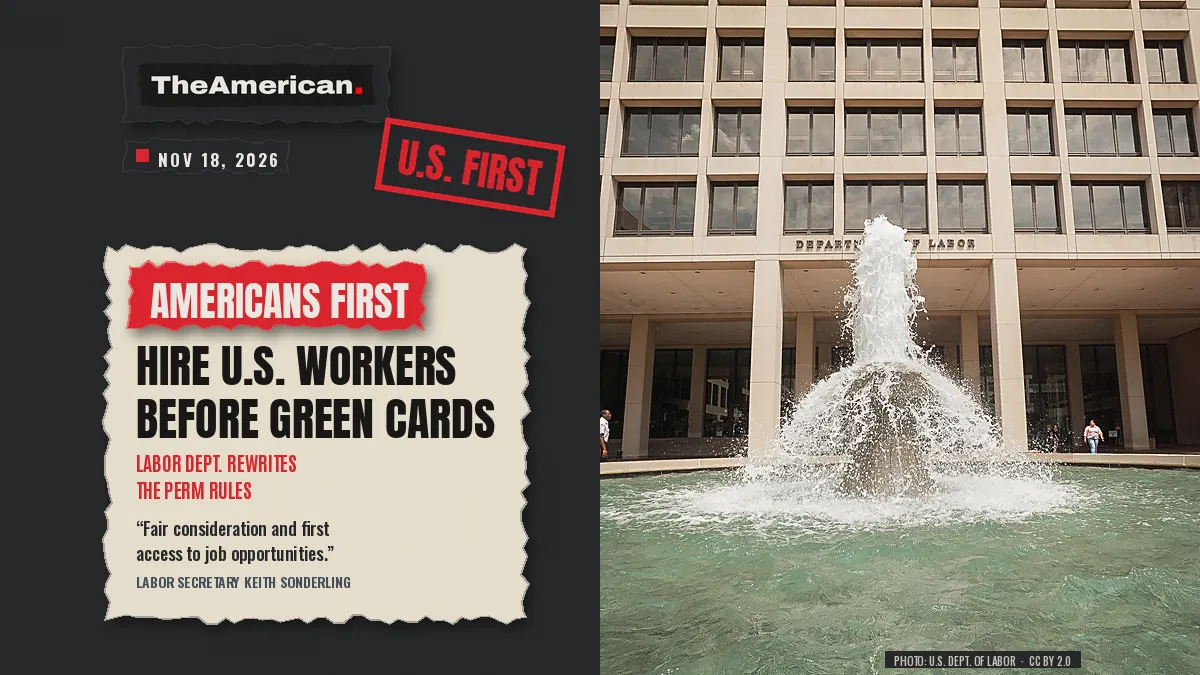
- The Labor Department proposed a sweeping overhaul of the PERM program, the labor certification most employers need before sponsoring a foreign worker for a green card.
- The rule would end Schedule A, which lets certain jobs, including nurses and physical therapists, skip the test of whether U.S. workers are available.
- Employers would face tougher recruiting rules and could not file within two years of laying off U.S. workers in the same or similar jobs, up from 180 days.
- Labor Secretary Keith Sonderling said the goal is to give American workers "fair consideration and first access to job opportunities."
- Public comments are open until Jan. 19.
Here's a question most people assume already has an answer. Before a company sponsors a foreign worker for a green card, did it actually try to hire an American?
On paper, yes. In practice, the Trump administration says, there have been too many ways around it.
The Labor Department this week proposed the biggest overhaul of the Permanent Labor Certification program, known as PERM, in nearly 20 years. The proposal was published Tuesday in the Federal Register under a title that says the quiet part out loud: "Improving Protections for U.S. Workers."
Some background. For most employment green cards in the EB-2 and EB-3 categories, a company first has to get PERM certification from the Labor Department. That certification tells the Department of Homeland Security two things. That there aren't enough U.S. workers able, willing, qualified and available to take the job. And that hiring the foreign worker won't drag down wages and working conditions for Americans doing similar work.
That's the law. The question is how hard anyone checks.
Labor Secretary Keith Sonderling says the new rule is meant to make sure American workers "receive fair consideration and first access to job opportunities," according to HR Dive, which reported the department calls it the "first comprehensive set of regulatory reforms to the program in nearly 20 years."
Here's what would change.
First, Schedule A goes away. That's a list of jobs the government decided long ago don't have enough U.S. workers, so employers can skip the labor market test entirely. Group I covers physical therapists and professional nurses. Group II covers people of exceptional ability in the sciences or arts, including college and university teachers. Under the proposal, the Labor Department would stop administering Schedule A, and those jobs would face the same test as everyone else.
Second, the recruiting gets real. Today's rules lean on mandated methods like posting with a state workforce agency and running ads in major newspapers. Newspapers. In 2026. The proposal adds electronic recruitment, so employers would have to reach U.S. job seekers where they actually look: company websites, job search sites, social media, job fairs.
Third, and this is the big one, layoffs count. Right now, an employer generally can't file a PERM application within 180 days of a relevant layoff. The proposal stretches that to two years for layoffs of U.S. workers in the same or similar jobs. It also covers workers laid off through third-party staffing companies, and sets standards for employers to report layoffs.
Read that again. Lay off Americans, and you don't get to turn around and sponsor a foreign worker for the same kind of job a few months later.
The proposal also expands the notice employers have to give U.S. workers when they file, and tightens compliance checks.
Immigration lawyers are already warning their clients. Lorraine D'Alessio, who runs an immigration law firm, told HR Dive the process could get "slower and costlier," and that "employers with recent or planned reductions in force should be reviewing their pipeline now."
That's sort of the point.
The rule doesn't come out of nowhere. In August, the Justice Department announced a settlement with OpenAI over claims the company discriminated against U.S. workers in favor of foreign workers. Months earlier, the Labor Department suspended processing PERM applications from the AI firm Cloudera for 180 days after a DOJ lawsuit.
It's a proposal, not a final rule. The public comment period runs 60 days, until Jan. 19.
If you've ever trained your own replacement, you already know which side of this you're on.